

The year British racing quietly stabilised
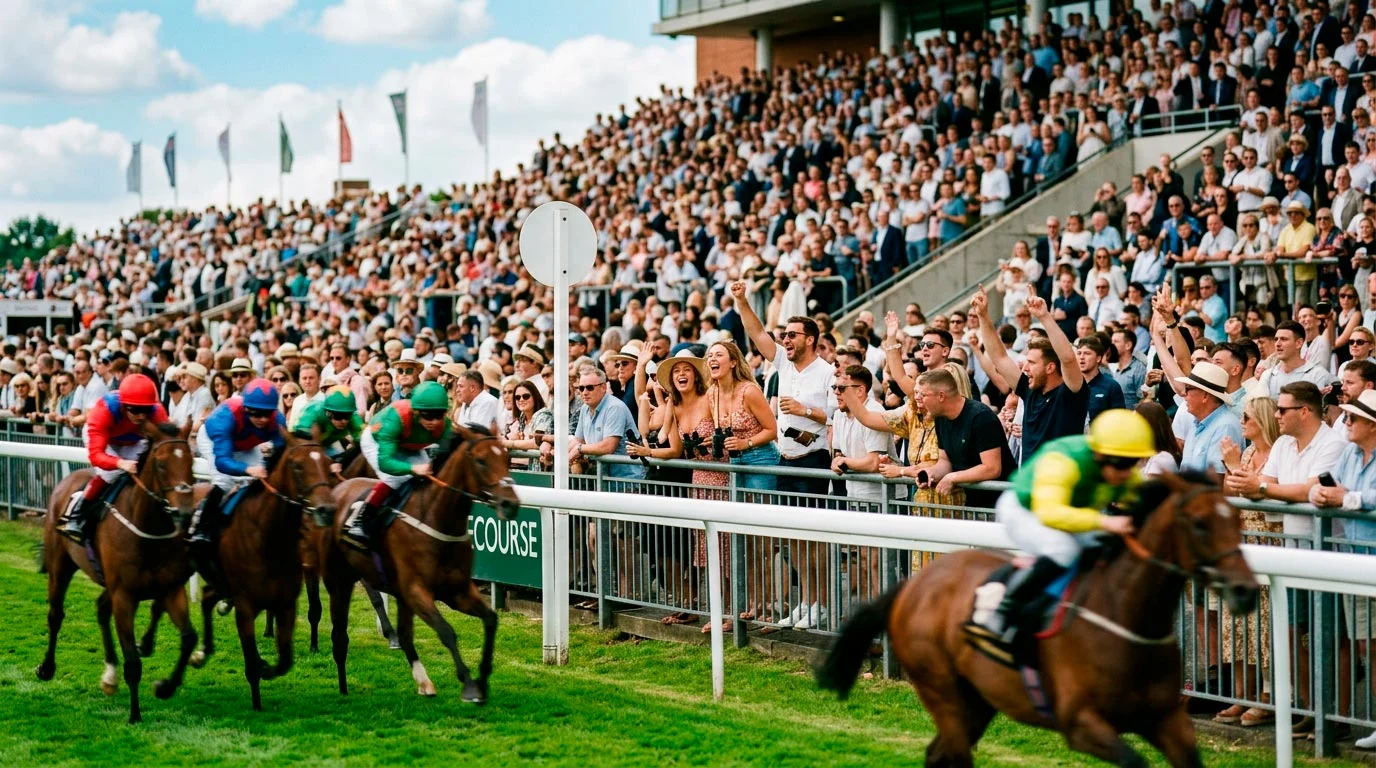
Five million people went to the races in Britain in 2025. The exact number, 5.031 million, was up 4.8% on 2024 and represented the first time the sport had broken five million since 2019. Behind that headline sat a more complicated picture – prize money up, fixture list slightly down, core fixture turnover badly down, premier fixture turnover slightly up – that describes an industry pulling itself into a different shape rather than simply growing.
Punters tend to ignore attendance figures as industry news rather than betting news, which is a mistake. Attendance drives betting turnover, sponsorship, Levy income and ultimately the prize money that keeps the sport producing fields worth betting on. Reading the 2025 numbers carefully tells you something important about which parts of British racing are getting stronger and which are not.
Attendance five-million mark
The 2025 figure of 5.031 million represents the return of a benchmark the sport had watched slip away through the pandemic and the slow post-pandemic recovery. Attendance in 2019 had just cleared five million; the 2020 and 2021 pandemic years essentially erased normal attendance patterns; 2022, 2023 and 2024 rebuilt steadily without hitting the threshold.
The composition of the 2025 attendance is as important as the total. Premier Fixtures – the top-tier Saturday meetings, festival days and major race meetings – drove most of the increase. Core Fixtures, the midweek cards and lower-grade meetings that make up the bulk of the calendar, saw attendance essentially flat year on year. The split reinforces a pattern that has been building for several years: the sport’s commercial value is concentrating at the top of the calendar while the base is under persistent pressure.
Royal Ascot, Cheltenham Festival, Glorious Goodwood, York Ebor, Aintree Grand National meeting and the Derby at Epsom account for a disproportionate share of total attendance. These six or seven meetings together draw well over a million attendees across their race days. The remaining four million attendees are spread across roughly 1,450 other fixtures, giving an average well below 3,000 per meeting at non-premier cards.
Fixture list in 2025
The BHA ran 1,460 fixtures in 2025, down marginally from 1,468 in 2024 and 1,488 in 2023. The two-year contraction represents a gentle reduction rather than a sharp cut, but the trajectory is downward and the BHA’s own forward modelling suggests the trend will continue.
The fixture list’s shape has shifted as well as its size. More Premier Fixtures with higher prize money, fewer Core Fixtures with modest prize money. The rationale is commercial: concentrate investment where attendance, broadcast value and betting turnover are strongest, pull resources from the weakest meetings. The trade-off is that the lower-grade horses and yards dependent on the Core Fixture calendar have fewer running opportunities.
Looking forward, the BHA 2025 Racing Report projected that the number of runs in Britain in 2027 would be 6 to 7% lower than in 2024. That figure combines fixture-list compression, horse-population decline and expected behavioural responses to tax and regulatory changes taking effect through 2026 and 2027. For punters, fewer runs per year means fewer betting opportunities across the calendar, and more concentration of betting activity into the top tier of meetings.
Prize money breakdown
Total UK racing prize money in 2025 reached £153 million, up from £148.3 million in 2024. The £4.7 million increase split unevenly: Flat prize money rose by £3 million, Jump prize money by £1.7 million. Within the overall total, the distribution across meeting tiers was heavily skewed toward Premier Fixtures, where prize money per race continues to rise while Core Fixture prize money has held flat or fallen slightly.
The Horserace Betting Levy contribution to the prize money pot was £66.9 million in the 2024-25 year, with an additional £4.4 million planned for 2026. That means Levy funding provides approximately 44% of total UK prize money, with racecourses, owners and sponsors making up the balance. Without the Levy, British racing’s prize structure would look dramatically different – probably closer to a boutique sport with limited grassroots depth.
The split between Flat and Jump prize money matters for punters because it affects which codes produce the strongest fields and the highest-class racing. The 2025 data suggests Flat remains the stronger commercial segment in raw prize-money terms, supported by the depth of international Group-race investment. Jump prize money’s £1.7 million increase is modest relative to the code’s commercial share, and some within the sport have argued the allocation does not reflect jump racing’s audience weight.
Premier vs Core turnover
The most interesting 2025 number is the split between Premier and Core Fixture betting turnover. Premier Fixtures showed average turnover per race of +2.7% year on year, indicating that the top-tier product is growing its betting appeal. Core Fixtures, meanwhile, saw average turnover fall 8.6% – a sharp decline that represents real commercial stress on the lower-grade meetings that make up most of the calendar.
The divergence matters structurally. Premier meetings are getting more betting attention; Core meetings are losing it. The pattern reflects both the concentration of promotional activity around headline events and the broader trend of betting turnover moving online and concentrating around highly visible cards with deep liquidity. A Saturday at Royal Ascot produces attention across every UK sports platform; a Tuesday at Southwell does not.
For operators and racecourses, the practical implication is that running Core Fixtures is becoming harder to justify commercially. The fixtures still fulfil a role – runner opportunities for lower-grade horses, regional race meetings, training grounds for young staff and officials – but their direct financial contribution is shrinking. Without cross-subsidy from premier meetings, many Core Fixtures would be loss-making.
The 2025 Q3 BHA Racing Report captured the pressure point. Betting turnover per race in 2024-25 was down 8% year on year, 15% against 2022-23 and 19% against 2021-22. The first quarter of 2025-26 showed total turnover down 9% year on year, with average turnover per Core Fixture down 14.4%. The trend across multiple years is clearly downward at the Core level, supported at the Premier level but not strongly enough to offset the broader compression.
What it signals for punters
The practical implication for punters is straightforward. Premier Fixtures are where the action is concentrating, where the betting turnover is healthiest, where the fields are deepest and where pricing is most competitive. Core Fixtures are where value occasionally lives – because fewer competing punters are studying those cards – but where liquidity on the exchange and promotional activity from bookmakers are thin.
A punter who bets exclusively on Saturday and festival racing is betting into a commercially strong segment of the calendar. A punter who covers midweek Core Fixtures is betting into a segment under visible stress, which produces both occasional value and periodic thin liquidity that can distort pricing.
BHA Chief Executive Brant Dunshea put the wider trajectory starkly in his March 2026 response to the Levy review: “It is disappointing that it has taken almost three years to determine there should be no change in the Levy rate. Throughout protracted negotiations British horseracing engaged with the Government in good faith, including providing clear evidence of a substantial – and growing – gap between our costs of providing the sport and the return we receive from betting.” The gap Dunshea refers to is visible in the turnover and attendance data. Premier Fixtures hide the gap to some extent; Core Fixtures reveal it starkly. Understanding the two-speed calendar is how the informed punter reads the market. The pillar on betting at horse racing covers the wider economic picture behind the 2025 numbers.
Articles
Published by the bettingathorseracing.com team.
