
Betting at Horse Racing in the UK: A 2026 Analyst's Guide
 Available in US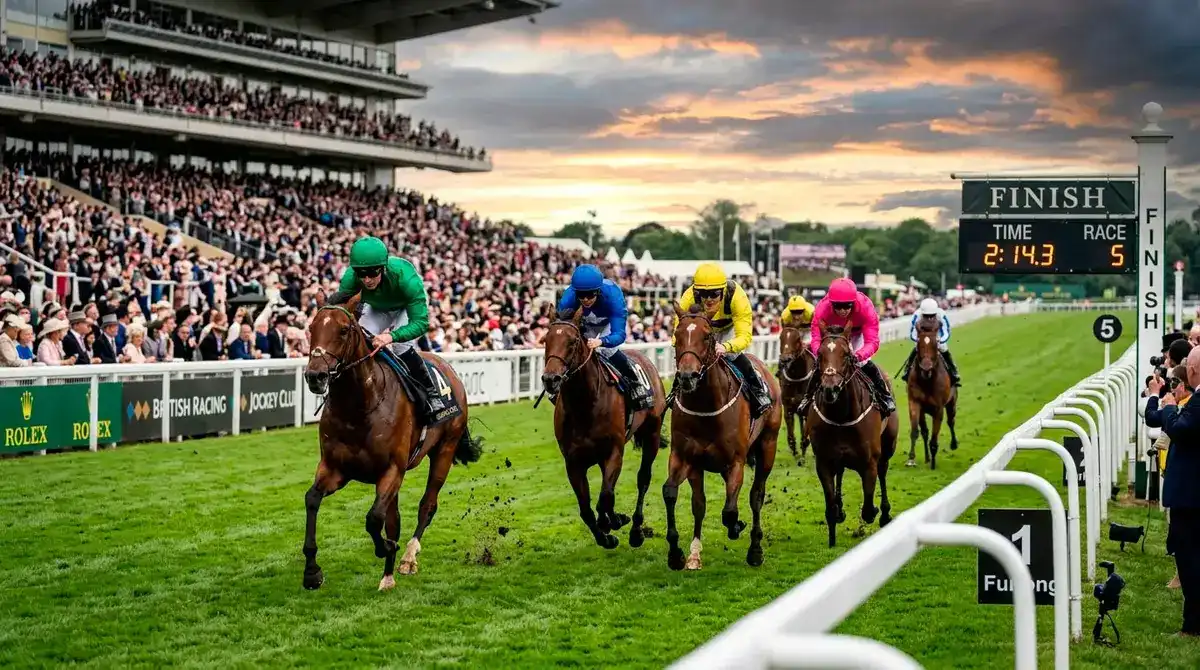
Why this guide exists in 2026
Nine years ago I walked into a Coral shop on a wet Tuesday in Doncaster, wrote a £2 each-way on a 16/1 chance, and watched it scrape into third. I got £8.40 back. That return wasn't luck — it was the place terms on a 16-plus handicap doing exactly what the small print said they would do. If I had understood those terms in the morning instead of on the walk home, I'd have backed another two horses that same afternoon under the same logic and ended the day in profit. That is the whole pitch of this guide: the rules of British racing betting are printed in black and white, but almost nobody reads them before the money goes down.
I have spent nine years modelling odds and tracking what the UK Gambling Commission does to the industry. The market has changed more since 2023 than in the previous decade. Betting turnover per race is down — in the financial year to March 2025, turnover per race fell 8% year on year, 15% against 2022-23 and 19% against 2021-22. The affordability-check threshold has dropped from £500 to £150 in monthly deposits. The Autumn Budget 2025 carved out a 15% rate for horse racing while the rest of remote gambling gets whacked with 25% from April 2027. And roughly £767 million in gross gambling yield still flowed through horse racing betting over the last reporting year.
If you are new to this, the numbers mean betting on UK racing in 2026 is perfectly legal and perfectly survivable — if you know what you are doing. If you are experienced, the same numbers mean the edges have moved and the bookmaker you used in 2019 is not the one you should be using now.
What this guide covers. The shape of the UK market, how odds really work, the bet types you actually need, the mechanics of each-way, what to check in a bookmaker, the big festivals, the Levy, affordability checks, the 2026 tax outlook and a sober note on responsible play. Every major claim carries a number behind it.
The short version for punters in a hurry
- Horse racing remote betting produced £766.7 million in gross gambling yield in the last reporting year — still one of the deepest betting markets in British sport.
- Best Odds Guaranteed is now the baseline concession: if the Starting Price is bigger than your early price, you get paid at the bigger number. Any firm not offering it is behind the market.
- The affordability-check trigger dropped from £500 to £150 in monthly deposits in February 2025 — prepare two forms of income evidence before you need them.
- Each-way is not a safety net. It is a compound bet, and it only pays its way above roughly 6/1 on standard terms or on specific handicap place-paid fields.
- Horse racing betting kept its 15% General Betting Duty rate in the Autumn Budget 2025 — a genuine carve-out worth remembering when the wider market jumps to 25% from April 2027.
How big is the UK racing betting market, really
Ask ten punters in a paddock what the UK racing betting market is worth and you will get ten wrong answers. The honest number is in the Gambling Commission's industry statistics, and for the financial year to March 2025 it reads £766.7 million in gross gambling yield for horse racing remote betting alone. Add retail shops and you are over the billion-pound mark. Set that against a total British gambling GGY of £16.8 billion — up 7.3% year on year — and you start to see horse racing's position: it is no longer the biggest horse in the stable, but it is still a workhorse.
£766.7m
Horse racing remote betting GGY, year to March 2025
£2.6bn
Total remote betting GGY across all sports in the same period
£2.5bn
Non-remote (retail) betting GGY, up 0.7% year on year
5.03m
Racecourse attendance in 2025 — first time over five million since 2019
Remote betting pulled in £2.6 billion in GGY last year. Football took £1.3 billion of that; horse racing £766.7 million; the rest was split across greyhounds, tennis, cricket and smaller sports. That ratio — football double racing's size on remote — is the reality behind every "racing is dying" headline. Racing is not dying. It is mid-sized and losing share.
Globally the picture is different. The worldwide horse racing market is valued at around $127.3 billion in 2025, forecast to hit $182.4 billion by 2030 at a 7.45% compound annual growth rate. The UK is a fraction of that pot but punches above its weight in betting intensity.
There is a small piece of good news in the 2025 numbers. Racecourse attendance broke through five million for the first time since 2019, up 4.8% year on year. Brant Dunshea, chief executive of the British Horseracing Authority, put that in political context: "We are the second most-attended sport, we employ people nationwide but also we are already facing other financial threats around the levy and affordability checks." A defensive statement dressed as a celebration, and it is worth reading as both.
The BHA puts the industry's direct revenues at £1.47 billion and its total annual contribution to the UK economy, including induced effects, at £4.1 billion. Racing is not just a sport. It is a supply chain.
The legal skeleton that holds it all together
A punter once asked me at Haydock why he needed to upload a driving licence to open a Paddy Power account when he could buy two bottles of wine at the garage with no questions asked. That is UK gambling regulation in one sentence: the law treats placing a bet with different caution than almost any other consumer transaction. You can argue about whether that is right, but you cannot pretend it isn't the rule.
Online horse race betting in Great Britain is legal, regulated and relatively mature. The regulator is the UK Gambling Commission, usually shortened to UKGC. Every operator taking a bet from someone physically located in Great Britain needs a remote licence, and the conditions attached — the Licence Conditions and Codes of Practice, or LCCP — run to hundreds of pages. You don't need to read them. You just need to know they exist, because they are the reason your operator asks for ID, monitors your deposits and sends you a "reality check" pop-up at 11pm on a Saturday.
Who regulates what. The UKGC handles licensing, enforcement and consumer protection. The British Horseracing Authority governs the sport — fixtures, rules of racing, integrity. The Horserace Betting Levy Board collects the statutory levy. The Betting and Gaming Council is the industry's trade body. These four bodies fight and cooperate in cycles, and punters live with the compromises.
On participation, the 2025 Gambling Survey for Great Britain put overall betting participation at 10% of adults, with a sharp gender split: 16% of men versus 4% of women had placed a bet in the four weeks to October 2025. Horse racing betting specifically sat at 4% of adults in that window, down from 7% across April to July. That dip is partly seasonal, but the direction of travel feeds into every regulatory debate you will read below.
The Levy is the one piece most punters have never heard of. Bookmakers with annual gross profits over £500,000 pay a statutory 10% levy on their horse racing business. That money — £108.9 million in the year to March 2025 — funds prize money, veterinary science and integrity. When politicians talk about "protecting racing", the Levy is usually what they mean.
One more thing the statute books say explicitly. "In the UK, racing and betting have a unique interdependency that goes back over 200 years." That line is European Commission State Aid clearance language the BHA has quoted back to Parliament more than once. It matters because horse racing betting is regulated as a category unto itself, which is why we are about to see it treated differently again in the Budget.
Odds: the only language the market actually speaks
Here is a test I give every new punter I mentor. I write "7/2" on a napkin and ask what happens to their £10 if it wins. The ones who say £35 are half right. The ones who say £45 are fully right. The £10 difference between those two answers is the entire gap between reading odds and understanding them.
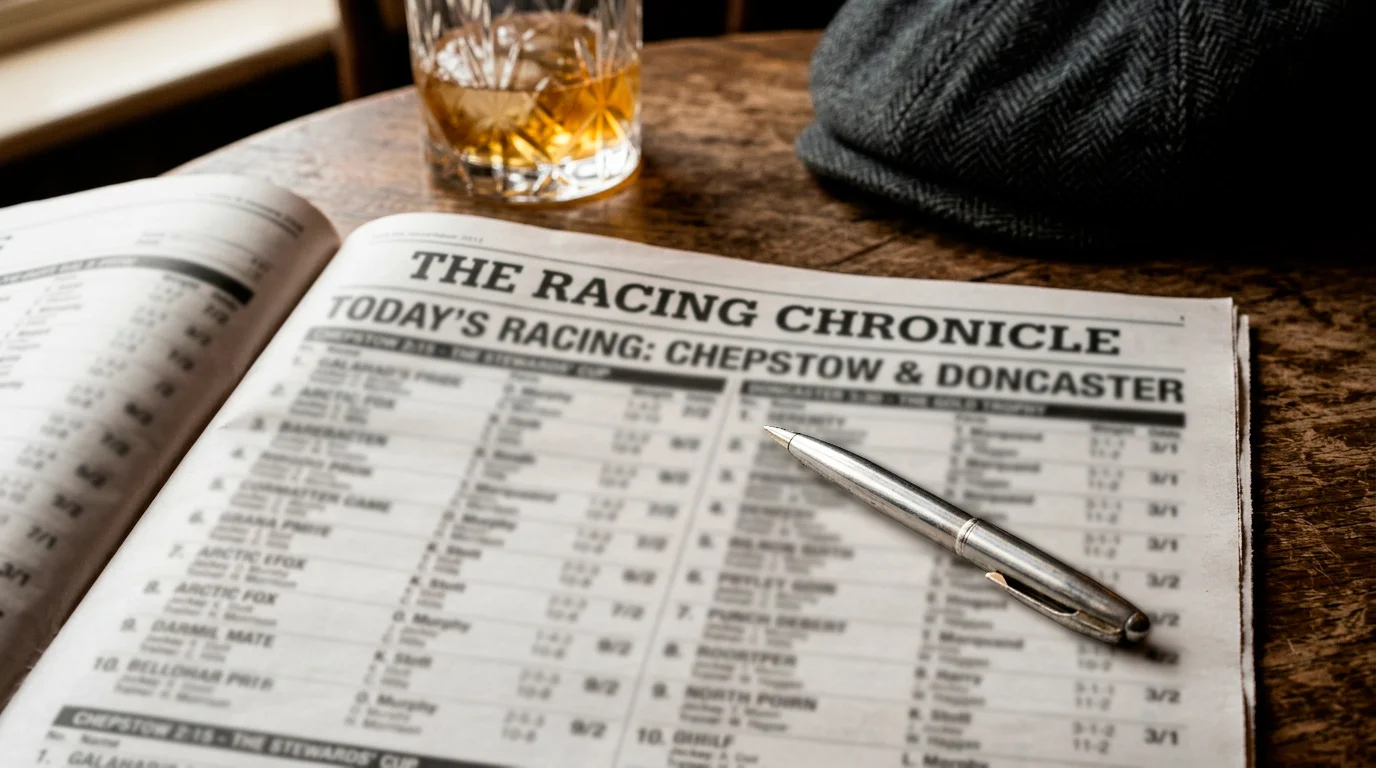
UK racing quotes fractional odds by default, even though the software almost always calculates in decimals. The fraction 7/2 tells you that for every £2 staked, you win £7 in profit — plus stake back. So £10 at 7/2 returns £35 profit plus £10 stake = £45 total. Decimal 4.50 is the same number dressed differently: multiply stake by 4.50 for total return.
Fractional thinking
"What's the profit on my stake?" A fraction like 7/2 tells you the profit side of the bet. Stake stays out of the number. You add it back on at the end when you're counting your winnings.
Decimal thinking
"What's my total return?" A decimal like 4.50 includes the stake inside the number. Multiply and walk away. No mental arithmetic on the rail.
A £20 stake at 6/1 — worked three ways
Fractional: 6/1 means £6 profit per £1 staked. £20 × 6 = £120 profit. Add stake: total return £140.
Decimal: 6/1 converts to 7.00. £20 × 7.00 = £140 total return. Same number, one fewer step.
Implied probability: 1 ÷ 7.00 = 14.3%. That is what the bookmaker is saying the horse's chance looks like before their margin is added.
Starting Price (SP) — the official price of a horse at the moment the race starts, set by the Starting Price Regulatory Commission using a sample of on-course bookmakers. It is the default price if you take "SP" instead of an early price, and it is the reference point for Best Odds Guaranteed.
Overround — the sum of all implied probabilities in a given race. In a fair book it would be 100%. In a real book it is more: 110% for a competitive handicap, 115-120% for a fractured market. The difference is the bookmaker's margin and it comes out of your pocket.
Odds-on prices deserve a warning. A horse priced 4/6 or shorter is "odds-on", meaning you stake more than you profit. Odds-on favourites in UK flat racing win roughly 55-60% of their races; horses priced 1.25 or shorter (decimal) win around 86% of the time. Those rates sound high, but the bookmaker's margin is priced on top, and backing every odds-on favourite blindly is a slow way to go broke. The 2025 Cheltenham Festival made the point: seven odds-on favourites started across the four days, five of them lost. Favourites generally at Cheltenham 2024 won 7 of 21 races — a 33% strike rate, which is the average across British flat racing too.
The deeper arithmetic — implied probability, overround, morning line versus Starting Price — lives in the piece on how UK horse racing odds really work. For this guide: the number on the board is not the price. The price is what remains after margin, after concessions, after BOG.
The bet types that actually matter on a Saturday card
There are about thirty named bet types on a UK racing app. You need five of them. After nine years running the numbers, my shortlist is: win, each-way, forecast, accumulator and Tote Placepot. Everything else is either a subset of those or a specialist tool you can learn later.
Win
The simplest wager in the sport. Back a horse, horse must finish first, get paid at the agreed odds. Dead heats split the winnings. A win bet is the default test of judgement because it has no hiding place.
Each-way
Two bets on one ticket. Half your stake on the horse to win, half on it to place — meaning finish in the top 2, 3, 4 or 5 depending on field size and race type. The place part is paid at a fraction of the win odds, typically a quarter or a fifth. The most misunderstood wager in British racing. I give it its own section below.
Forecast and Tricast
A forecast is picking the first two home in order. A Tricast adds the third. "Straight" means exact order; "reverse" means either order (twice the stake). The Computer Straight Forecast dividend is set by formula from the starting prices of the first two. In small fields with long-priced horses it can pay surprisingly well; in big handicaps it is a shot in the dark.
Accumulator
A double is two selections rolled together; a treble is three; a four-fold is four. The arithmetic is multiplicative: returns from the first leg roll onto the next. That compound effect is why multiples are marketed so hard and also why they lose money over a season.
Four-fold ITV Saturday multiple — a £5 example
Leg 1: 7/2 (decimal 4.50). £5 × 4.50 = £22.50.
Leg 2: 5/2 (3.50). £22.50 × 3.50 = £78.75.
Leg 3: 3/1 (4.00). £78.75 × 4.00 = £315.
Leg 4: 4/1 (5.00). Final return: £1,575.
The unattractive part: if each horse has a 20-35% chance, the probability all four win is roughly 0.5%. The expected value is below the stake once margin is layered in.
Tote Placepot
A pool bet across the first six races of a meeting. Pick a horse (or horses) to place in each race; if all six place, you share the pool. Placepot dividends reward perms and occasionally pay five figures. Over the long run, second favourites show a 19.4% strike rate — 7,021 wins from 36,249 runs — which matters when you decide how many horses to include per leg.
Tote — the UK's pool betting operator. Every Tote bet goes into a central pool; the dividend is calculated after the race by dividing the pool (minus Tote's margin) between winning tickets. The opposite of fixed-odds.
Specialist wagers — Scoop 6, Jackpot, Lucky 15, Yankee, Super Heinz — are combinations or pool variants of the above. Most are poor value for the casual punter. The rule I give friends: if you can't explain in one sentence how the bet settles, don't place it.
Each-way, demystified: the one bet most punters misprice
My Doncaster story from the intro was an each-way. Not because I was conservative, but because the race was a 16-runner handicap paying four places at a quarter the odds, and my horse was 16/1. On paper that bet looks like a shrug. In reality, the mathematics made it the best-value ticket on the card — and nobody around me was taking it.
£5 each-way on a 16/1 chance that finishes third
Total stake: £10 (£5 win + £5 place).
Win part: horse loses, £5 goes in the bin.
Place part: settled at a quarter of 16/1 = 4/1. £5 × 4 = £20 profit + £5 stake = £25.
Net return: £25 against £10 outlay = £15 profit.
That is why the 16-runner handicap at a quarter the odds is a different animal from the 8-runner class 3 at a fifth.
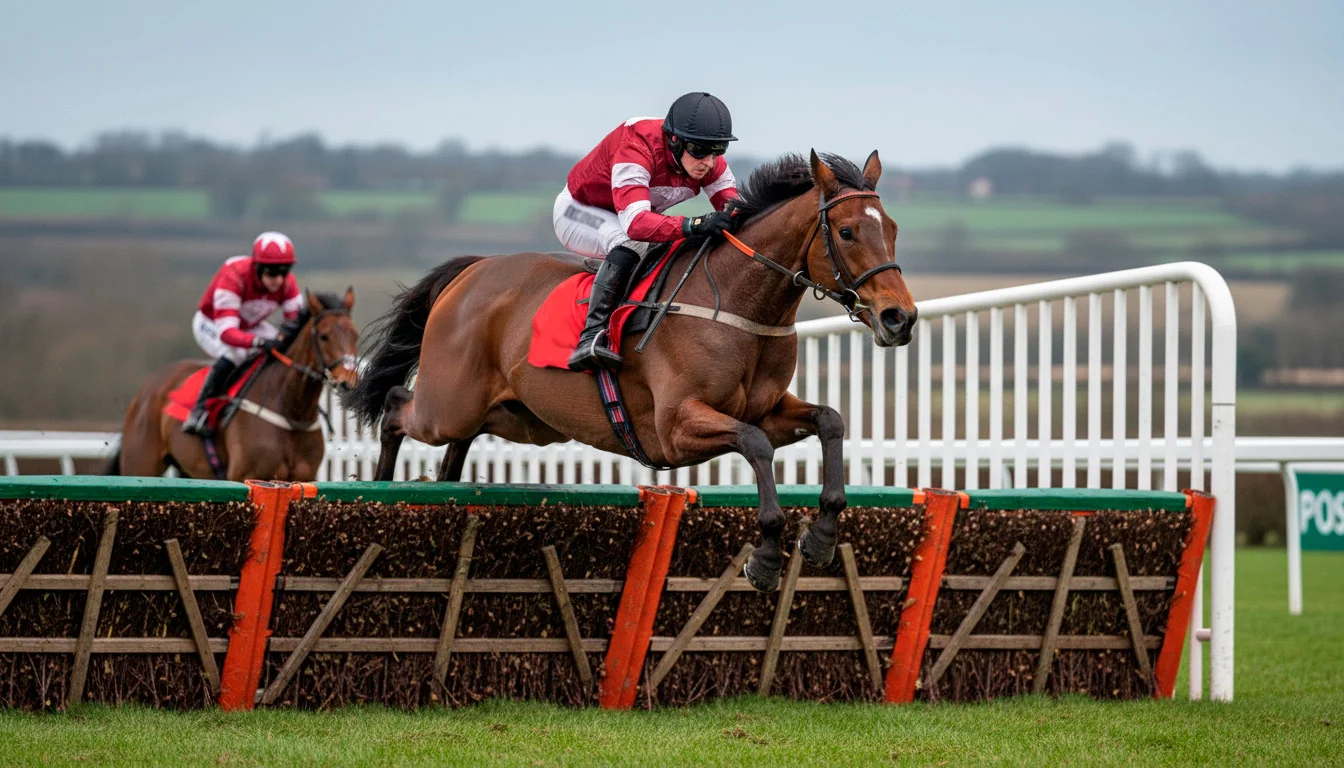
The place terms are the whole game. In a standard non-handicap with 8 or more runners, bookmakers typically pay three places at 1/5 the odds. In a 12-15 runner handicap they pay three places at 1/4. In a handicap of 16 or more runners they pay four places at 1/4. Below 8 runners it reduces to two places, and in fields of 5 or fewer there is no each-way market at all. Those fractions and field-size brackets are the reason one £10 each-way is smart on Saturday and another is a waste of money on Tuesday.
Do
- Check place terms before you click. "3 places at 1/5" is a different bet from "4 places at 1/4".
- Go each-way above roughly 6/1 on standard terms, or from 4/1 on enhanced place terms.
- Use each-way on large-field handicaps where extra places lift the expected value.
- Treat extra-place offers as a genuine edge on the big meetings — they shift break-even down by two full points.
Don't
- Each-way a 9/4 favourite. The place part is returning 9/20 — you are betting to lose money on a short priced horse.
- Forget Rule 4. If a horse is withdrawn after you bet, your place-part odds are cut too.
- Assume extra places are free. They cost the bookmaker margin that gets clawed back somewhere else.
- Each-way into a 5-runner race. There is no each-way market there, and most apps will grey it out.
The break-even maths is worth committing to memory. On a 1/4 odds place, the place return alone needs to cover the total stake. Below 6/1 it struggles. This is why each-way is not — and never was — "insurance". It is a compound bet, and compounds work at their worst on short prices.
Extra-place promotions on Grand National, Cheltenham Gold Cup day and Royal Ascot genuinely shift the mathematics. Five places at 1/5 instead of four at 1/4 means a 10/1 chance finishing fifth pays you out where it otherwise wouldn't. On a 34-runner Grand National with five paid places, the edge is roughly 3% in expected value across a sample of sensible prices.
The full break-even tables, handicap field-size grids and dead-heat worked examples live in the piece on each-way betting on UK horse racing. For this guide: each-way above 6/1 or on enhanced terms, never on short odds, always read the place fraction before the price.
Choosing a bookmaker without losing your shirt or your sense
A friend of mine spent three years betting with a brand he'd been sent a free-bet email from in 2019, never asking whether it was the best place for his action. When I finally talked him into comparing settled returns across three accounts for a month, he found he'd been getting paid roughly 6% less on winners than he would have done with a firm offering Best Odds Guaranteed and reliable extra places. Over his turnover, that was several hundred pounds a year.
I will not rank operators here. The right bookmaker depends on what you bet on, how often, and which concessions you value. What I will give you is the checklist I use myself.
The 2026 account-opening checklist
- UKGC licence verified on the Gambling Commission's public register — not just a logo.
- Best Odds Guaranteed offered on UK and Irish racing, from 8am race day.
- Non-Runner No Bet available on ante-post markets for the main festivals.
- Extra-place offers on ITV racing or the season's headline meetings.
- Rule 4 policy published in plain English.
- Deposit limits, reality checks and self-exclusion accessible in two clicks.
- Withdrawal time published — 2 hours to your account is a reasonable 2026 benchmark.
- Racecard display including form, official rating, weight, draw and silks as standard.
Best Odds Guaranteed is the baseline concession on UK racing. If a firm doesn't offer BOG — paying you at the Starting Price when it is bigger than your taken price — they are not competing for racing business, they are tolerating it. Take 5/1 at 9am and the horse drifts to 8/1 at the off, BOG pays you at 8/1. That is real money on winning bets.
Extra places are the second real edge. On Grand National Saturday, Cheltenham Festival and Royal Ascot, most operators pay an extra place or two on big handicaps. Some go further and pay six places on 16-plus-runner handicaps — genuine value on 10/1-plus each-way chances.
A word on the unregulated market. The 2025 BHA Right to Bet survey of over 14,000 punters found 9% had already used unregulated bookmakers and 12% had been approached by one. The unregulated market offers fewer restrictions and better-looking prices — but zero consumer protection. Grainne Hurst, chief executive of the Betting and Gaming Council, has been blunt: "Forcing punters to hand over bank statements isn't 'frictionless'; it's intrusive and will drive customers to the illegal market, where there are no safeguards at all."
How to check a UKGC licence in 30 seconds. Every licensed operator publishes its licence number in the page footer. That number links to the public register on the Gambling Commission website, showing licence status, the legal company behind the brand, and any active sanctions. Missing or broken? Walk away.
Operator selection is a one-time job for most punters and a rolling audit for professionals. I recommend every casual punter keeps two accounts minimum and checks prices on both before placing a bet over £20. The price difference between firms on the same horse is routinely 5-10% — an easy edge if you do nothing else right.
The calendar that shapes a punting year
British racing runs over 1,460 fixtures a year, but most of the money moves through eight or nine of them. The casual punter who lands in the market for the Grand National, Cheltenham and Royal Ascot is not being unsophisticated — they are being rational. Those meetings absorb a disproportionate share of turnover, media and bookmaker competition.
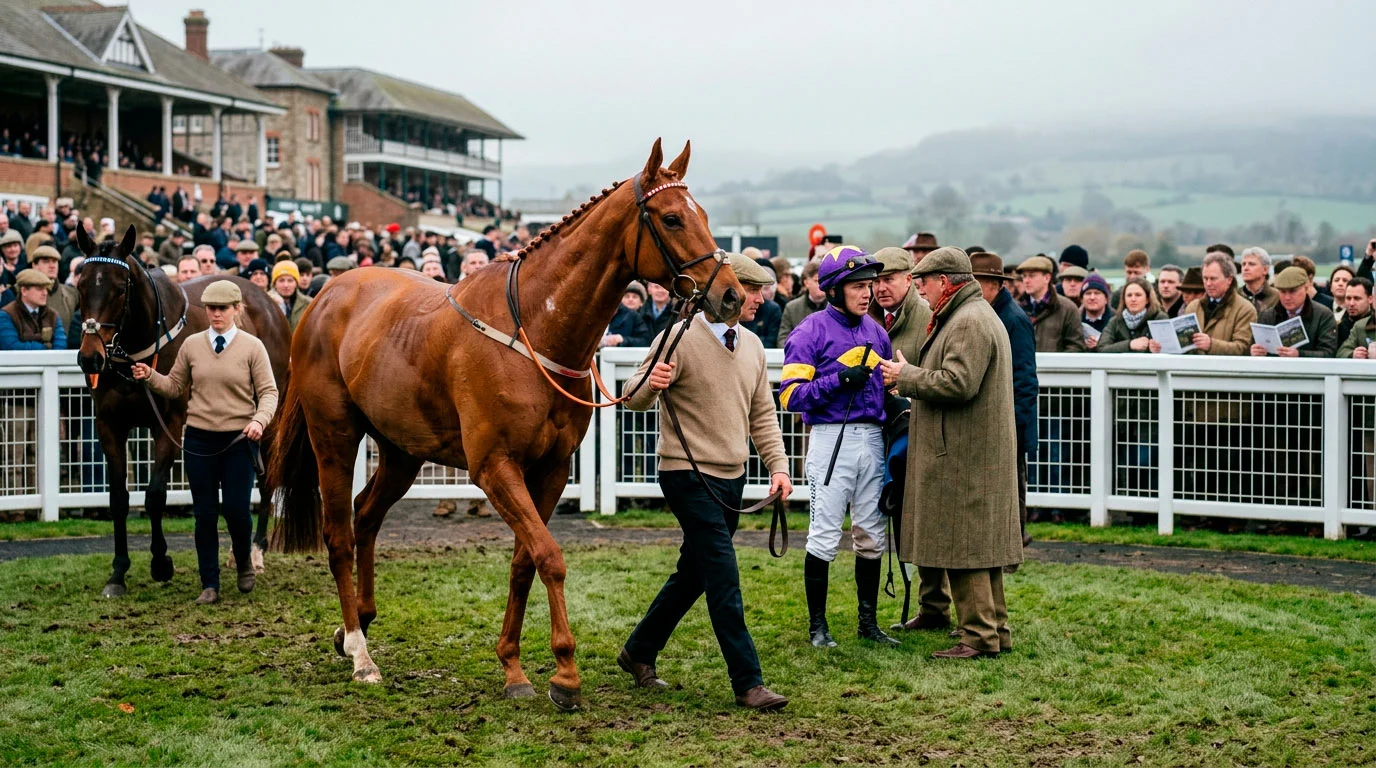
The Grand National is the outlier among outliers. Around £250 million was wagered on the 2025 running — roughly 700% more than on the Cheltenham Gold Cup, and enough to make the National the UK's largest gambling event for the second consecutive year, ahead of the FA Cup Final and the Super Bowl.
FUN FACT — The 2022 Grand National was won by Noble Yeats at 50/1, ridden by amateur jockey Sam Waley-Cohen in his retirement ride. A £5 each-way at morning prices would have returned £312.50.
The Cheltenham Festival runs four days in mid-March. Attendance in 2025 was 218,839 — down 22% from the post-Covid peak of 280,627 in 2022 — but turnover remains enormous. William Hill's Lee Phelps is on record for 2026: "We expect around £450 million to be wagered across the four days of the 2026 Festival. The contest between bookmakers and punters at Cheltenham is unrivalled in jump racing." A BGC estimate put unregulated-operator exposure at the 2025 Festival at around £60 million — the black market tracks the biggest meetings too.
Royal Ascot is the Flat equivalent. Five days in mid-June, eight Group One races, a deliberately curated social atmosphere. The stands-side versus far-side draw bias over straight sprints is the most famous pace-map in British racing, and it shifts with rail movements.
The Grand National 2026 field is capped at 34 runners — down from the traditional 40 since 2024. Entries have fallen from 126 a decade ago to 78 in 2026. The prize fund stays at £1 million with £500,000 for the winner. The capped field changes the each-way maths: on 34 runners, most firms will pay 5 or 6 places in extra-place promotions.
Ireland has won ten of the last twelve Prestbury Cup contests at Cheltenham. The 2025 Festival ended 20-8 in Ireland's favour. Ignore that imbalance and you leave money on the table on Irish-trained runners every March.
Deep dives on these events live in their own pieces — the Grand National betting guide covers Aintree in full — because each meeting has its own betting rhythm, its own draw biases, its own field-size quirks. Build your year around the six or seven meetings where bookmaker competition is fiercest, and save experimental action for midweek cards where stakes and scrutiny are both lower.
The Levy: where your stake actually goes after the bet settles
If you have placed a bet on a British horse in the last twelve months, you have paid into the Horserace Betting Levy whether you realised it or not. The Levy is paid by bookmakers, but the money comes out of their margin, which means in practice it comes out of prices — out of your expected return.
The Levy is statutory. Bookmakers with annual gross profits over £500,000 pay 10% on their horse racing business to the Horserace Betting Levy Board, which redistributes the yield into prize money, integrity services, veterinary science and regulation. The yield for the year to 31 March 2025 was £108.9 million — the highest total since 2017.
£108.9m
Levy yield for year to March 2025
£66.9m
HBLB prize money budget 2024
£19.4m
Grant-funded regulatory spend 2025
£58.7m
Year-end reserves — above Board's preferred range
The headline figure hides a volatile trend. Alan Delmonte, HBLB's chief executive, put it candidly: "The last two months, February and March 2025, saw bookmakers' gross profits well above recent norms, with March's outturn reflecting particularly bookmaker-friendly results at the Cheltenham Festival." Translation: the 2024-25 yield looks healthy partly because the 2025 Cheltenham ran badly for punters.
What the industry actually worries about is the structural trend. Turnover per race in 2024-25 was down 8% year on year, 15% on 2022-23 and 19% on 2021-22. A 10% Levy on a shrinking base yields less in real terms every year, even when individual months look buoyant.
Brant Dunshea, BHA chief executive, called the latest Levy review a disappointment: "It is disappointing that it has taken almost three years to determine there should be no change in the Levy rate. Throughout protracted negotiations British horseracing engaged with the Government in good faith, including providing clear evidence of a substantial — and growing — gap between our costs of providing the sport and the return we receive from betting." Racing's case is simple: staging costs are rising, Levy yield is shrinking, and the gap has to be closed somewhere. The BHA's projection is a £250 million shortfall over five years if affordability checks keep biting.
The Levy debate bleeds directly into the most bruising policy argument in British betting: affordability checks and the black market.
Affordability checks and the market that grew in the shadow
A regular at my local asked me last autumn why his bookmaker had frozen his account over a £175 deposit across the month, when he had been depositing twice that for a decade. The answer is the single most consequential piece of UK gambling regulation in five years — and most punters only find out when it lands in their inbox.
The Gambling Commission's financial-risk checks — affordability checks in shorthand — were the regulatory response to the Gambling Act review. Operators must conduct "light-touch" financial-vulnerability checks on customers crossing certain thresholds. The first-tier threshold was £500 in monthly deposits when it launched in August 2024. It was cut to £150 in February 2025. That is the number my friend had just crossed.

What a light-touch check involves. At the £150 monthly-deposit threshold, the operator pulls public credit data — CCJs, bankruptcies, insolvency markers. Usually invisible to the customer. At higher thresholds (around £1,000 per rolling 30 days), operators can ask for bank statements, payslips or other financial evidence directly. That is the step that drives the behavioural response the industry has measured.
The Racing Post's 2025 Big Punting Survey — roughly 10,000 respondents — found 23.7% had been through an affordability check, up from 16.6% in 2023. 61% of respondents asked for financial documents refused (down from 66% in 2023). In the BHA Right to Bet survey of over 14,000 punters, 52% said they would significantly reduce or stop betting if checks were rolled out in full.
The harder number to verify, but the one that has shaken the policy debate most, is the 522% rise in traffic to unlicensed sites accepting bets on British racing between August 2021 and September 2024 — an IFHA-led study the BHA has promoted. Add the BGC estimate of £60 million in illegal-market exposure during Cheltenham 2025, and the shape becomes clear: some customers walking away from checks are walking to offshore sites with zero UK consumer protection.
Wilf Walsh, chair of the Racecourse Association, put the argument in consumer terms: "Consumers can purchase significant amounts of alcohol or high-end goods using a credit card without intervention, whereas gamblers face limitations even when betting with their own disposable income." That comparison lands or doesn't depending on your view of gambling as a consumer activity. 2026 will not resolve it.
61% of surveyed punters refuse the financial evidence requested. 9% have already used an unregulated operator. The grey space between those numbers is where UK racing is quietly losing turnover the Levy cannot collect on.
The practical advice for a 2026 punter crossing the £150 line: have two forms of income evidence ready — a recent payslip and a three-month bank statement, or a self-assessment return if self-employed. Account-freeze delay while your operator waits is typically 24-72 hours. Refusing is legal; the consequence is usually a deposit cap or closed account. The full detail lives in the piece on affordability checks and UK horse racing.
The 15% carve-out: why racing won a Budget fight it was expected to lose
In the weeks before the Autumn Budget 2025, the smart money in racing's lobbying corner was on losing. The Treasury had signalled a harmonised 21% gambling tax rate that would have added roughly £66 million a year to racing's cost base and, by BHA modelling, put 2,752 jobs at risk. When the Chancellor stood up in November, racing's horse-trading with Whitehall had worked. The 15% General Betting Duty on horse racing remote betting was preserved. The rest of remote betting moves to 25% from April 2027.
40%
New Remote Gaming Duty rate from April 2026 (up from 21%)
25%
New General Betting Duty for most remote sports betting from April 2027
15%
Carved-out GBD rate retained for horse racing
£1.1bn
OBR revenue forecast from the package by 2029-30
That three-tier structure — 40%, 25%, 15% — is the most asymmetric piece of gambling tax policy the UK has seen in a generation. Remote Gaming Duty (casino, slots, bingo) nearly doubles overnight. Remote sports betting on football, tennis and the rest rises from 15% to 25%. Horse racing stays flat. The carve-out is the product of sustained lobbying by the BHA, the Racecourse Association and the Jockey Club.
The industry response is sharply split. Grainne Hurst, BGC chief executive, called the package a cosmetic win dressed as a rescue: "Racing has seemingly been protected from higher betting duties. It sounds like a win, but anyone who understands how the sector operates knows that isn't true. This exemption is cosmetic. Beneath the surface, this Budget delivers a devastating blow to the very ecosystem that racing relies on." Her argument: if operators bleed profit from the 40% RGD hit on gaming, they will cut costs across the book — marketing on racing, extra-place promotions, sponsorship.
EY modelling for the BGC projects up to 15,000 high-tech jobs at risk from the RGD rise, with £4 billion in stakes potentially displaced to the unlicensed market. A separate estimate for the sports-betting rise puts £2 billion in offshore displacement and 1,750 UK job losses on the table. Against that, the OBR forecasts the full package to collect an extra £1.1 billion a year by 2029-30, with £26 million earmarked for counter-black-market enforcement. Hurst has separately warned of up to 500 betting shop closures, with Levy losses alone worth around £20 million in reduced sponsorship.
For a working punter in 2026, the practical consequence is near-zero in year one and potentially meaningful from 2027. The 15% rate on racing stays, so prices should not tighten for tax reasons alone. What might tighten is concessions — extra places, BOG, free-bet promotions — because the firms offering them also run high-margin gaming businesses now taxed much harder. If your bookmaker cuts extra-place offers from Royal Ascot or Cheltenham in 2026, the cause is not racing-side regulation. It is the 40% gaming duty hitting overall profit and something having to give.
Keeping the bet a hobby, not a habit
The 2025 Gambling Survey for Great Britain put 48% of adults as having gambled at least once in the previous four weeks, with 27% gambling on products other than the National Lottery. Online sports betting participation was 8%. The harm rate within those figures is a small fraction of the total — the reason a regulated market exists. Punters who fall into trouble almost never get there from one Saturday gone wrong. They get there from a slow drift, usually tied to chasing losses.
The personal-stop checklist — apply before each session, not after the damage
- A pre-set deposit limit is active on every account you use.
- A monthly loss figure you can afford is written down where you will see it — not "kept in your head".
- Reality-check pop-ups are turned on at 60 minutes maximum.
- GamStop is registered against your full name and date of birth if you have any history of chasing losses.
- A person in your life knows roughly what you bet, how often and why.
- You have never — not once — moved money between accounts or used a credit card to fund a bet after a losing run.
GamStop is the national self-exclusion scheme. Signing up blocks you from every UKGC-licensed operator for 6 months, 12 months or 5 years. Deposit limits and reality checks are lighter-touch tools inside your account — every operator offers them, most bury them a menu deeper than they should. If your operator doesn't offer both within two clicks, that is a signal about how seriously they take duty of care.
If you are worried about someone else. The GambleAware helpline (0808 8020 133) runs 24 hours, is free and independent of operators. You don't need to be the gambler to call — friends and family are a large part of the case load. The BHA runs its own welfare signposting through racecourses and trainer federations.
Affordability checks are a regulatory intervention imposed on everyone above a threshold. Personal responsibility tools are optional settings you apply to yourself, before you need them. One is a blunt instrument. The other is what keeps betting a pastime. Don't confuse them, and don't wait for the regulator to impose limits you could have chosen yourself.
Questions I get asked every week
How do horse racing odds work in the UK?
UK racing quotes in fractions by default. A price of 5/1 means that for every £1 staked, you win £5 in profit, plus stake back — £10 at 5/1 returns £60. Decimal odds show the full return as one number: 5/1 is 6.00, so £10 × 6.00 = £60. Fractional odds hide the stake; decimals include it. The Starting Price (SP) is the official price at the off and acts as the reference point for Best Odds Guaranteed — if you take 5/1 early and the horse drifts to 6/1 at SP, BOG pays at 6/1.
What is an each-way bet and when is it worth it?
Each-way is two bets on one ticket: half your stake on the horse to win, half on it to place. A £5 each-way costs £10. The place part pays at a fraction of the win odds, typically 1/4 or 1/5. The bet is worth it above roughly 6/1 on standard terms, or from around 4/1 with enhanced extra-place promotions on big handicaps. Below those prices, the place part struggles to cover the full stake and each-way becomes a money-leak.
What does Best Odds Guaranteed actually give me?
BOG pays you at the bigger of two prices: the one you took when placing the bet, or the Starting Price at the off. Take 7/2 at 10am and the horse goes off at 9/2 SP, BOG settles at 9/2. If it shortens to 3/1, you still get paid at your 7/2. The concession typically kicks in from 8am on race day and is standard at every competitive UK bookmaker. Any firm not offering BOG is not competing for your racing business.
How many places are paid on each-way bets at a UK racecourse?
Standard terms: 2 places at 1/4 in fields of 5-7 runners; 3 places at 1/5 in non-handicaps of 8 or more; 3 places at 1/4 in handicaps of 12-15; 4 places at 1/4 in handicaps of 16 or more. Fields of 4 or fewer have no each-way market. On big meetings — Grand National, Cheltenham Festival, Royal Ascot — bookmakers routinely enhance to 5 or 6 paid places, which materially shifts expected value on longer-priced horses. The 2026 Grand National's 34-runner capped field is a good example.
What is the Horserace Betting Levy and why does it matter to punters?
The Levy is a 10% statutory charge on bookmakers' gross profits from British racing, paid by firms above £500,000 in annual gross profits. The yield — £108.9 million in the year to March 2025 — funds prize money, integrity services and regulatory oversight at the Horserace Betting Levy Board. Punters don't pay it directly, but stronger Levy means bigger prize pots, better horses, better races and better betting markets. That is why "protecting racing" is a political slogan with direct consequences for the product you bet on.
Is online horse race betting legal in Great Britain?
Yes, provided you are 18 or over and betting with a UKGC-licensed operator. Every licensed operator displays its licence number in the page footer, which links to the Gambling Commission's public register where you can verify status. Betting with an unlicensed offshore operator isn't illegal for the punter in most cases, but you have zero consumer protection if something goes wrong — no ombudsman, no compensation, no UK legal route. The regulated market is the only safe option.
What are affordability checks and at what deposit level do they trigger?
Affordability checks — officially "financial-risk checks" — are the UKGC's mechanism to screen for financial vulnerability. The first-tier threshold is £150 in monthly deposits (reduced from £500 in February 2025). At that level the operator pulls public credit data — insolvency markers, CCJs — usually invisible to you. Higher thresholds (around £1,000 per rolling 30 days) can trigger requests for bank statements or payslips. Refusing is legal, but the consequence is typically a deposit cap or account closure. Prepare two forms of income evidence in advance.
Where the sharp punter goes from here
If you read this guide end to end, you now know more about UK racing betting in 2026 than roughly 90% of the people placing bets on it this weekend. That is a statement about how shallow most punters' engagement with the mechanics is. The gap between understanding Best Odds Guaranteed and not is small in effort and large in long-run returns. Nothing in this guide is a secret or a system. It is the baseline.
What you do with it depends on how much you bet, and why. Casual punters who stick to Saturday ITV racing and the big festivals will get most of the value from the bookmaker checklist, the each-way rules and the responsible-play tools. More engaged punters who bet midweek and take ante-post positions will want to drill into the odds mathematics, the Tote pool products and the concession-terms detail in the cluster pieces.
The market in 2026 is tighter than it was in 2019. The regulatory friction is real. The black market is real. The arithmetic of a well-placed each-way on a 16-runner handicap is still real too, and works the same way it did when I watched my Doncaster bet scrape into third nine years ago. The game has always rewarded the punter who reads the rules. It just rewards them a little more now, because so few of their competitors bother to.
Articles
Written by the editors at bettingathorseracing.com.
